













Modern life moves quickly, keeping us in a constant state of rushing. This fast pace often peaks at work, where many people spend eight or more hours every day. Fast-paced office environments can easily become major sources of daily stress.
Many office workers face demanding routines daily. You might wait for an urgent call while preparing for an upcoming meeting. Simultaneously, you navigate workplace dynamics, manage personal schedules, and plan household chores. By the end of the day, your shoulders feel tense, your lower back aches, and your legs feel stiff.
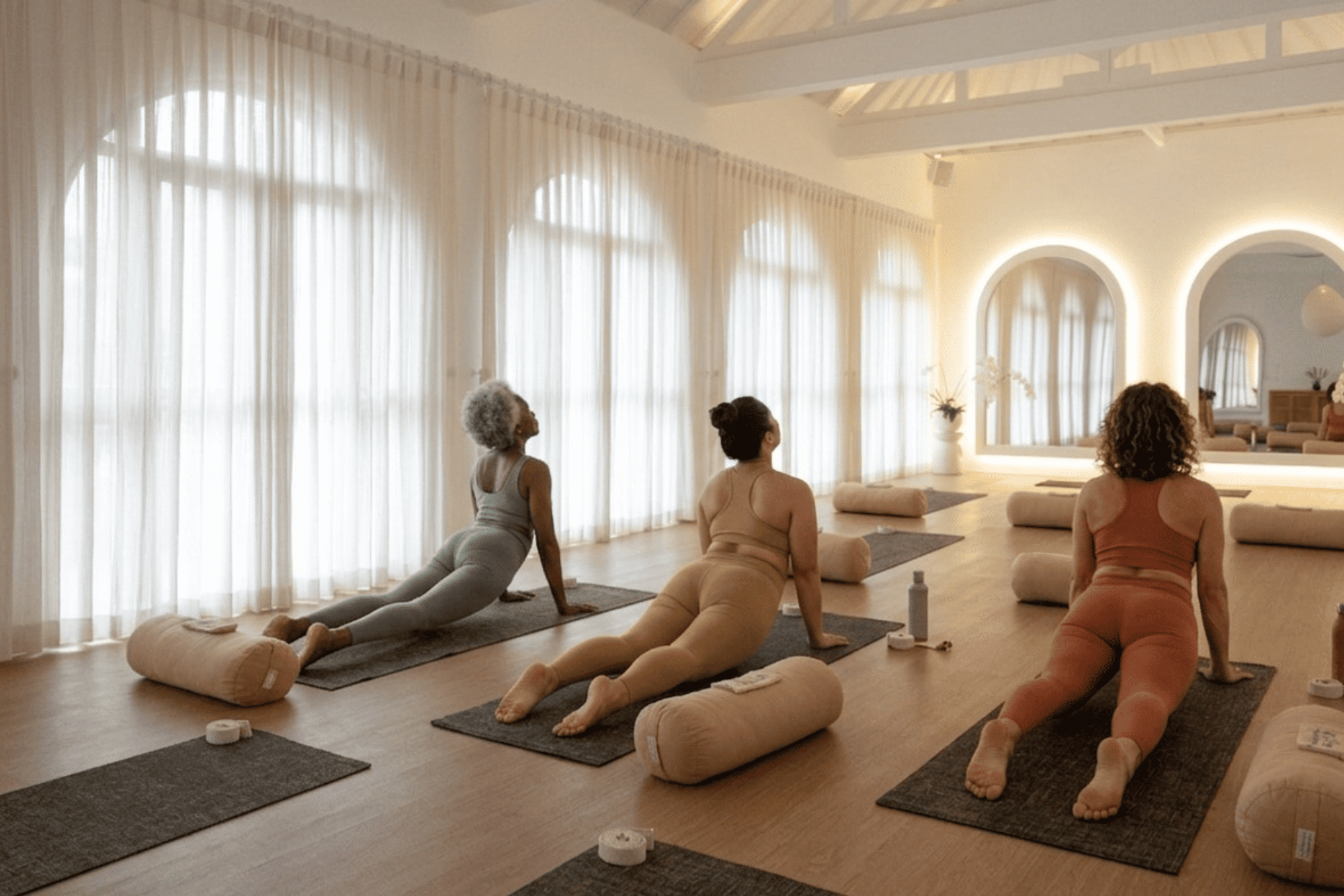
At Goddess Retreats, we offer restorative yoga to help women restore total balance. We believe daily yoga practice provides essential ongoing care for your mind and body. Practicing for just 10 minutes before bed or right after work works wonders. Regular movement improves your mindset, relieves tension, and enhances overall physical health.
Our specialist Yogi created this quick and gentle Office Yoga Flow to target areas held tight by desk work. Find a quiet space, unroll your yoga mat, and release your workday tension.
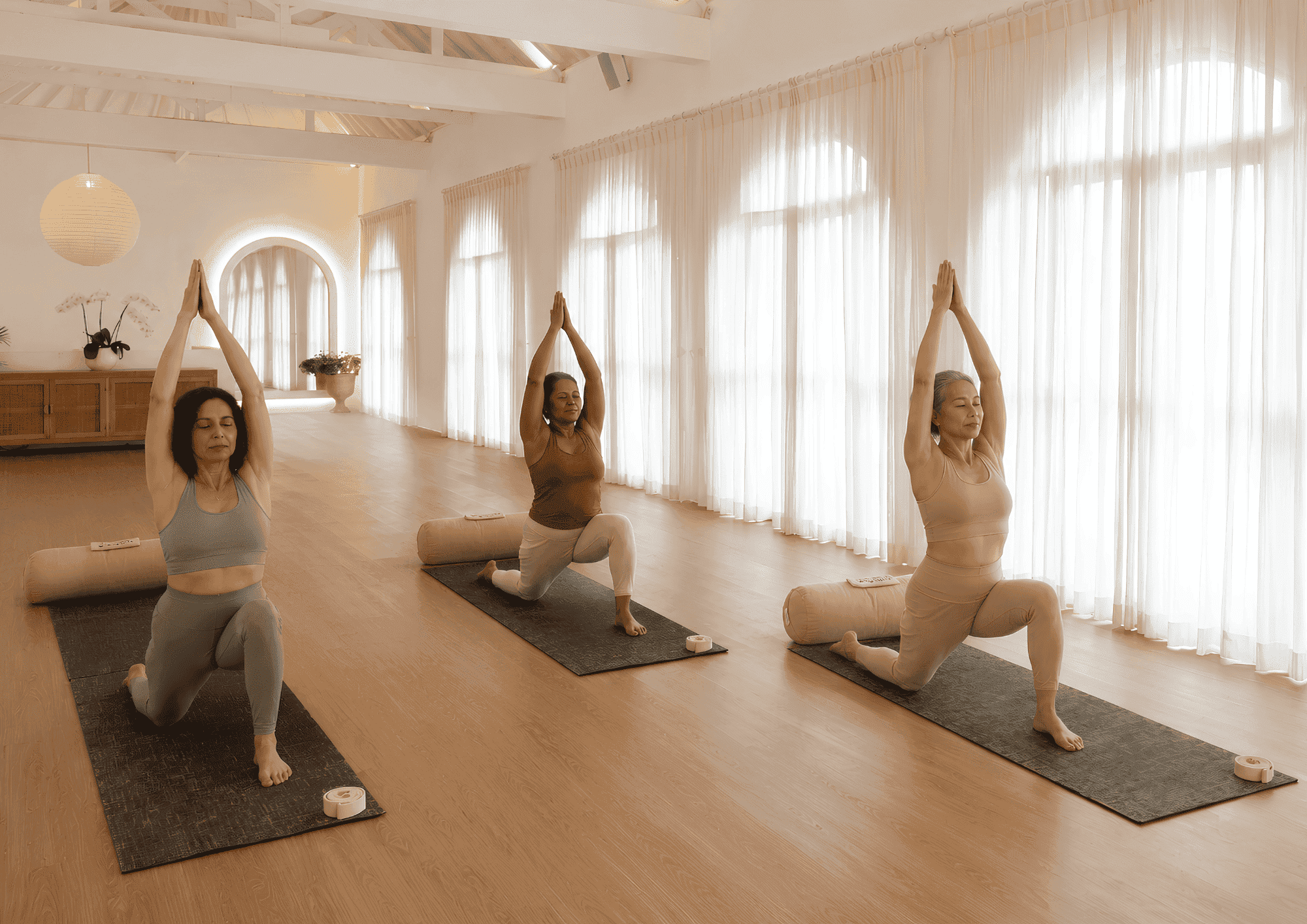
1. Alternate Nostril Breathing (Nadi Shodhana)
Breathing forms the essential foundation of this sequence. Starting with conscious breath allows you to arrive fully in your body and quiet your mind.
Alternate Nostril Breathing is a simple yet powerful technique that settles your emotions. It effectively calms racing thoughts, reduces anxiety, and eases night-time restlessness:
- Sit comfortably with a tall spine, relaxed shoulders, and an open chest.
- Rest your left hand in your lap or on your left knee. Bring your right hand to your face.
- Lightly anchor your right index and middle fingers between your eyebrows. You will use your thumb and ring finger to alternate nostrils.
- Close your eyes and inhale deeply through your nose.
- Close your right nostril with your thumb, then inhale slowly through your left nostril.
- Close your left nostril with your ring finger so both sides remain closed. Pause gently at the top of your inhale.
- Open your right nostril and exhale slowly through the right side. Pause briefly at the bottom of your exhale.
- Inhale slowly through your right nostril.
- Close both nostrils again using your thumb and ring finger.
- Open your left nostril and exhale slowly through the left side.
Repeat this process for 5 to 10 cycles. Allow your full attention to follow the natural rhythm of your breath until work stress fades away.
2. Bound Angle Pose (Baddha Konasana)
Bound Angle Pose offers exceptional benefits for women’s health. It circulates fresh energy through pelvic organs, easing menstrual and menopausal discomfort. Additionally, it relieves deep hip stiffness caused by prolonged sitting.
How to Practice Bound Angle Pose:
Sit with your legs extended straight ahead. Sit on a folded blanket if your hips feel tight.
- Exhale, bend your knees, and draw your heels toward your pelvis.
- Drop your knees open to the sides and press the soles of your feet together.
- Grasp your big toes or wrap your hands around your ankles or shins. Always keep the outer edges of your feet flat on the floor.
- Maintain a neutral pelvis by balancing weight evenly between your pubic bone and tailbone.
- Lengthen your torso while drawing your shoulder blades gently back. Avoid forcing your knees downward; simply allow your inner thighs to relax.
- Hold for 1 to 5 minutes, then inhale, lift your knees, and extend your legs forward.
3. Downward-Facing Dog (Adho Mukha Svanasana)
Downward-Facing Dog stretches and strengthens your entire body. Desk work often causes rounded shoulders and tight chest muscles. This pose opens the front body while building essential upper-body strength.
How to Practice Downward-Facing Dog:
- Begin on all fours with wrists under your shoulders and knees under your hips.
- Tuck your toes and lift your hips high, drawing your weight back toward your heels.
- Keep your knees slightly bent if your hamstrings feel tight.
- Press firmly through your palms and rotate your inner elbows toward each other.
- Engage your core muscles and press your torso toward your thighs.
- Hold for 5 to 8 deep breaths before lowering your knees back to the mat.
4. Tree Pose (Vrksasana)
Tree Pose provides a grounding standing balance for practitioners of all levels. It creates mental clarity, calms an overstimulated nervous system, and restores physical focus after a demanding day.
How to Practice Tree Pose:
- Stand tall with your feet together.
- Place the sole of your right foot onto your inner left thigh or calf (avoid pressing on the knee).
- Bring your palms together at your heart center and focus your gaze on a steady point ahead.
- Raise your hands above your head if you feel balanced.
- Hold for 8 to 10 deep breaths, keeping your core engaged and shoulders relaxed.
- Release your right foot back to the mat. Continue to the next pose before switching sides.
5. Garland Pose (Malasana)
Garland Pose opens the pelvis while stretching the calves, hips, and lower back. It offers an excellent antidote to desk fatigue and provides great benefits for general flexibility.
How to Practice Garland Pose:
- Lower into a deep squat with your feet as close together as comfortable. Keep your heels on the floor or support them on a rolled mat.
- Open your knees slightly wider than your torso.
- Exhale, lean your torso forward, and fit it between your inner thighs.
- Press your elbows against your inner knees while bringing your palms together in prayer position.
- Hold for 30 seconds to 1 minute, then inhale and stand up slowly.
6. Warrior 1 (Virabhadrasana I)
Warrior 1 introduces a gentle backbend that opens tight hip flexors, quads, and chest muscles. It stimulates spinal mobility and immediately reduces tension in your neck and shoulders.
How to Practice Warrior 1:
- Transition from Warrior 2 by turning your hips forward and reaching both arms overhead.
- Keep your palms facing each other or press them together gently.
- Relax your shoulders down and lift your chest, arching your upper back slightly.
- Sink into your front leg while keeping your back leg active and strong.
- Hold for 3 to 6 deep breaths.
7. Warrior 2 (Virabhadrasana II)
Warrior 2 builds strength, stamina, and concentration. It stretches your hips, inner thighs, and groin while stimulating full-body circulation.
How to Practice Warrior 2:
- Step your right foot forward and send your left leg back about one leg’s-length.
- Keep your right toes pointing forward and turn your left foot out to a 45-degree angle.
- Bend your right knee directly over your right ankle, keeping your weight balanced evenly between both hips.
- Extend your arms parallel to the floor and gaze over your right fingertips.
- Hold for 8 to 10 steady breaths.
8. Child’s Pose (Balasana)
Child’s Pose serves as the ultimate resting posture to complete your sequence. It grounds your energy, calms your central nervous system, and releases remaining spinal tension.
How to Practice Child’s Pose:
- Lower to your knees and sit back on your heels.
- Open your knees wide to the edges of your mat with your big toes touching.
- Rest your belly between your thighs and bring your forehead gently to the floor.
- Extend your arms forward or rest them alongside your body.
- Hold for 1 to 5 minutes while breathing deeply into your back body.
End your practice by returning to a comfortable seat. Take a moment to set a positive intention, recite a grounding affirmation, or close with a quiet Namaste.
Want another Yoga flow? Click here for our longer restorative Yin Yoga Flow for cultivating inner peace at home.
If you are still feeling stressed click here for our 5 tips for relaxing and distressing, or if you’re in need of a longer rest and reset it may be time for a Yoga Retreat to restore and realign with your true self. Click here to compare retreats.
